Following the recent boom in solar park developments the renewable energy sector has stepped up to the next level and now the time has come to focus on managing and directing the highly volatile renewable energy output via various storage systems.
BESS projects as next step in Estonian energy infrastructure
The need for controllable energy capacity is further enhanced by Estonia’s desynchronisation from the Russian energy grid and connecting with Continental Europe’s grid. This puts greater pressure on our energy infrastructure to maintain frequency and grid balance on our own.
Most promising and readily available short-term solutions are battery energy storage systems (BESS) – essentially huge batteries that are loaded when electricity is cheap and that provide electricity to the grid when prices are surging. As such BESS enables to reduce the price surges at peak consumption times. Due to this potential many developers have already opened BESS parks or have taken those in pipeline.
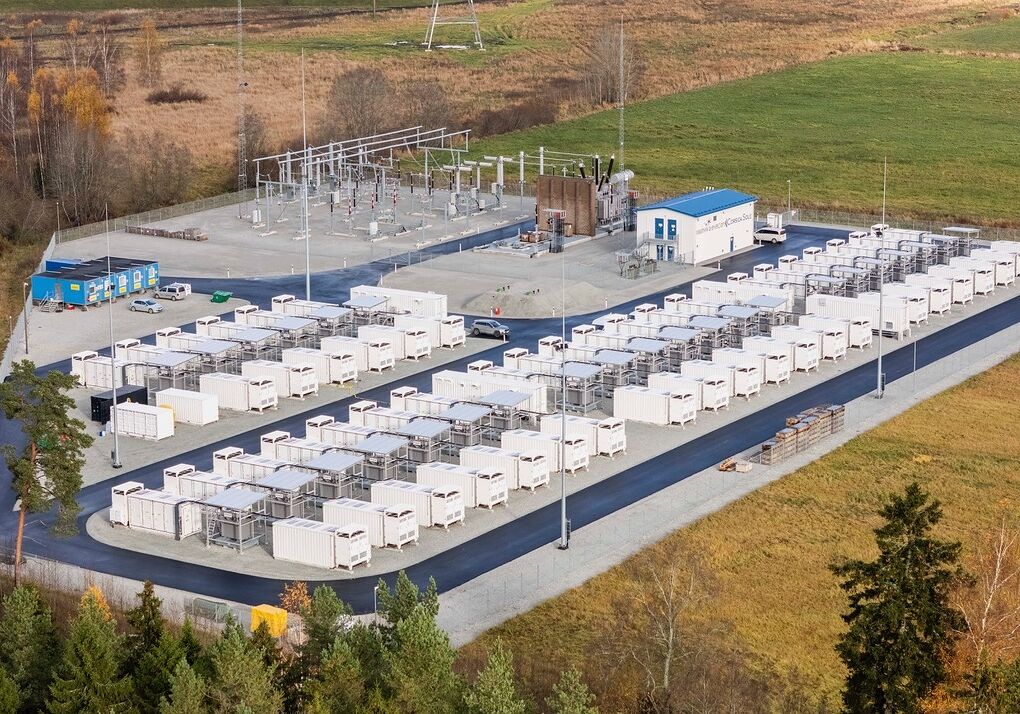
Recent projects have also demonstrated that financing for BESS is available on commercial terms from banks and other private sector financing institutions. As such, BESS projects are not only beneficial and profitable in theory but have proven to be bankable in practice. This trend can be seen across Europe with 27.1 GWh new capacity installed in 2025 [1] but also in Estonia, where only recently one of Continental Europe’s larges BESS parks was opened.
Financing BESS projects
COBALT has been involved in a number of BESS financing projects helping to bring together the interests of financers and project developers, assisting with developing the financing and securities package as well as with various preparatory steps required to secure the financing.
Securing financing for the BESS project is in some ways similar to any other project financing – proper homework has to be done and the developer should have a clear understanding of the costs and future profitability of the BESS park. However, stemming from the unique nature of BESS parks, financing of their development also has specific considerations to be taken into account.
Revenue model
By nature, BESS parks earn profit from energy arbitrage, buying electricity and loading BESS with low prices and selling upon price surges. In order to facilitate this and provide flexibility to the BESS operator in determining when and in which amounts of electricity it is willing to sell (based on market conditions, storage availability, or renewable generation profiles), having in place flexibility power purchase agreements (FPPA-s), is advisable. This trend has become more popular in Europe with nearly 12 GW/24 GWh of BESS capacity contracted under FPPAs in 2025 – triple the volume of 2024 [2]. Given the BESS role in maintaining frequency, additional revenue can be earned via FCR (Frequency Containment Reserve), aFRR (automatic Frequency Restoration Reserve), and mFRR (manual Frequency Restoration Reserve) contracts with TSOs (Transmission System Operators), like Elering in Estonia. Further synergies may be achieved by directly combining existing solar parks with BESS parks, which provides additional flexibility and greater revenue certainty than pure market exposure. Financers tend to look more favourably at a more diversified revenue portfolio, as such, a combination of all three revenue streams is likely to provide the best results.
Technology
Given that BESS is a technology heavy field and the revenue depends solely on the functioning of the BESS units, attention to unit manufacturer’s reliability and purchase contract details is paramount. Manufacturer’s clean track record and solid warranty provisions are important considerations for financers. Moreover, attention should be paid on cyber security and data protection related aspects as large BESS plants connect directly to the main energy grid and could be potential targets for (cyber)attacks.
Current BESS units have a usable life cycle of around ten years, which is considerably shorter from traditional wind or solar parks. Thus, for obtaining financing a clear plan for mid-life repairs and end-of-life replacement, generally in form of reserve accounts, must be in place. This shorter life-span also ties directly to the tenor of the possible financing.
Construction
BESS plants require significant planning and construction activities, though generally smaller in size and required land area than comparable solar or wind parks they still require suitable conditions, primary of which is proximity to the energy grid with sufficient capacity. Early engagement with TSO regarding grid connections is vital as lenders are reluctant to proceed without clear commitments from TSO in that regard. As with all construction projects, planning and environmental permits, land lease and usage arrangements as well as construction agreements should be considered early on.
Operation
In addition to pre-launch agreements, lenders typically expect to see at least terms sheets or initial agreements regarding long-term operation and management agreements with performance guarantees (including battery availability and round-trip efficiency floors). Degradation-adjusted performance benchmarks should be built into O&M contract KPIs. Given the nature of BESS units also insurance agreements and conditions are carefully scrutinized – specialised BESS property and fire risk coverage is required and standard energy asset policies are often insufficient given the complexities and possible material negative effects of BESS fires. Fire suppression systems and thermal management are key underwriting considerations. Inclusion of cooling, fire protection and monitoring systems within each BESS container unit is increasingly expected by insurers.
Estonia is rapidly establishing itself as a reference market for BESS deployment in the Nordic-Baltic region. Our Minister of Energy and the Environment has confirmed that more battery parks of the will be needed, and the pipeline of projects in development reflects that policy direction. Good track record of successful projects from private financing is likely to boost further growth and lender confidence in the field.
Cobalt experts have extensive knowledge and experience in managing BESS financing projects with the unique capability of covering both financing related nuances as well as providing comprehensive legal advice in relation to BESS purchasing, O&M and grid connection contracts, planning and development as well as energy infrastructure and regulatory aspects.
Photo: Baltic Storage Platform